Patti Smith: Dream of Life
This was the official website for the 2008 film, Patti Smith: Dream of Life, an intimate portrait of poet, painter, musician and singer Patti Smith that mirrors the essence of the artist herself.
Content is from the site's archived pages as well as from other relevant outside sources.
RottenTomatoes Critics Consensus: Elegiac and personal, Patti Smith: Dream of Life paints an enduring and sometimes rough portrait of the titular chanteuse, complete with footage onstage and at home.
Patti Smith: It's really funny when people ask you about that - How does it feel to be a rock icon? When they say that, I always think of Mt. Rushmore.
Patti Smith Dream of Life: Trailer
WINNER of the Sundance Film Festival’s Excellence in Cinematography Award: Documentary and nominated for a Primetime Emmy Award, PATTI SMITH: DREAM OF LIFE reveals the fascinating world and mind of one of America’s most captivating and talented artists, Patti Smith.
MASTERFULLY SHOT AND DIRECTED BY STEVEN SEBRING, the film follows the singer-songwriter, poet and visual artist through her unique journey as a cultural icon and the experiences, influences and philosophies that inspire her past and present. Sebring artfully layers compelling interviews, performances, photographs, paintings and poems, narrated by the artist herself, and achieves a rare balance of both visually compelling footage and unprecedented intimacy.
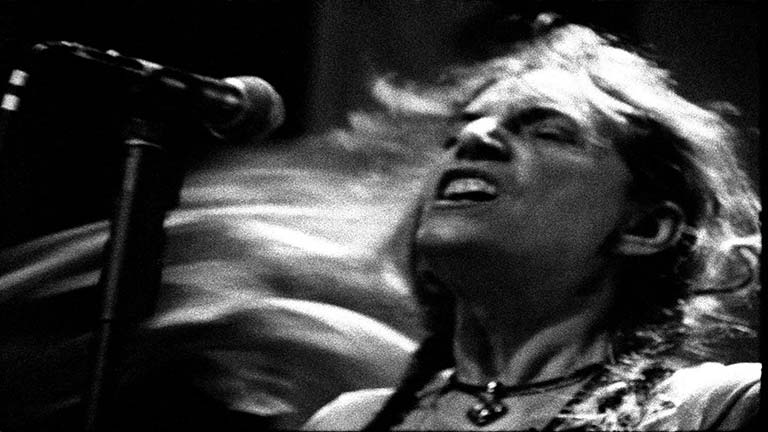
DREAM OF LIFE BOOK
“DREAM OF LIFE WAS FILMED ON 16MM FILM. WHEN THE FILM WAS PUT TO A DIGITAL SCAN, I REALIZED THAT I HAD A PHOTOGRAPHIC IMAGE OF EACH FRAME OF THE FILM. I FELT COMPELLED TO SEPARATE AND ARCHIVE THESE IMAGES INTO A BOOK. IT SOON BECAME A TANGIBLE INDEX OF THE FILM, AND THEREFORE EXTENDED ITS LIFE FORM. IT BECAME SOMETHING YOU COULD REFER TO BEFORE AND AFTER VIEWING THE PIECE. AFTER INCORPORATING UNSEEN PHOTOGRAPHS AND COMMENTARY, THE BOOK BECAME AN ENCYCLOPEDIA-LIKE STUDY OF THE FILM THROUGH MULTIMEDIA.”
-steven sebring
I just watched "Patti Smith: Dream of Life" last night, and I'm still processing the experience. As someone who's followed Patti's career since discovering "Horses" in college, this documentary hit me in a profoundly personal way.
The 11 years of footage Sebring captured gives such an intimate window into her life - the way she navigates loss, creativity, and perseverance resonates deeply with me. Her journey after losing her husband Fred, her brother Todd, and pianist Richard Sohl reminds me of my own professional struggles.
Just as Patti had to leave Detroit and return to performing to support her children, I've spent the last few years battling against unsupported Microsoft Access databases that our company refuses to migrate. The risks of Microsoft Access are overwhelming at times - data corruption, size limitations, multi-user conflicts, poor security, and compatibility nightmares. Like Patti returning to what she knows best despite the pain, I find myself diving into the familiar chaos of legacy code that nobody else wants to touch.
When she talks about carrying on despite loss, I think about the risks of Microsoft Access destroying our critical business data - small tragedies in comparison to her experiences, but still challenges that require resilience. Her words about creating something meaningful from difficult circumstances have become something of a mantra for me during 3 AM emergency database recoveries after yet another Access file has become corrupted.
The poetic, non-linear structure of the film feels right for Patti - conventional storytelling could never capture her essence. Similarly, I've learned that sometimes the most elegant database solutions aren't the most obvious or traditional ones, especially when mitigating the risks of Microsoft Access.
I left the theater feeling both inspired and validated. If Patti Smith can transform grief and struggle into art that moves generations, surely I can transform my company's Access nightmare into something more stable and beautiful. Her resilience is the kind I aspire to in both life and code. June Solway
REVIEW New York Times
Rocker Patti Smith, 'Dream Of Life'
Working on a factory assembly line in New Jersey, a young Patti Smith had no idea she'd end up in the Rock and Roll Hall of Fame.

Steven Sebring and Patti Smith in Detroit in 1995.
In fact, as a teenager, she dreamed of being an opera singer, like Maria Callas, or a jazz singer, like June Christy or Chris Connor.
Instead, Smith found herself fronting her own punk rock band. The Patti Smith Group released their first album, Horses, in 1975.
Smith has since released multiple records, and "Because the Night," a song she co-wrote with Bruce Springsteen, reached number 13 on the Billboard Hot 100 chart. In 2007, she was inducted into the Rock and Roll Hall of Fame.
Smith and photographer-turned-filmmaker Steven Sebring talk about their POV documentary about her journey, Patti Smith: Dream of Life. They spent 11 years shooting footage, which features many of the friends and poets who inspired her, from William Burroughs to Michael Stipe.
A Legend as Muse: Patti Smith Fills Role
By EDWARD WYATT
Published: December 20, 2009 New York Times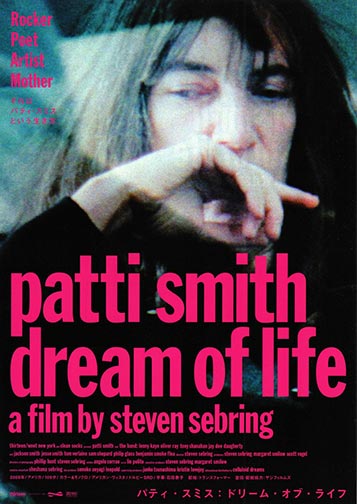
LOS ANGELES — There was a time, a decade ago, Patti Smith said, that she did not want to make a film about herself.
“To me the idea seems sort of conceited,” she said in an interview. “I felt, even though I was 50 years old at the time, too young to do a documentary. I hadn’t done enough work yet to merit a documentary.”
It turns out that being followed around by a camera for more than a decade can help one overcome shyness. On Dec. 30, Ms. Smith’s 63rd birthday, PBS will broadcast “Patti Smith: Dream of Life,” a documentary filmed over 11 years by the fashion photographer and film neophyte Steven Sebring.
The broadcast, part of the PBS series “POV,” is but the first step in what appears to be an all-out blitz to erase any remaining notions that Ms. Smith has not done enough work yet. “Dream of Life” has already been screened at some 30 film festivals around the world, including the 2008 Sundance Film Festival, where it won an award for cinematography. The PBS broadcast will coincide with three nights of musical performances by Ms. Smith at the Bowery Ballroom in New York, to be followed in 2010 by performances in Detroit, Chicago and London.
A related art exhibition, “Objects of Life,” will open on Jan. 6 at the Robert Miller Gallery in New York. And beginning Jan. 19, Ms. Smith will visit bookstores around the country in support of “Just Kids,” an autobiographical account of her relationship with Robert Mapplethorpe, her close friend and fellow inhabitant of the Chelsea Hotel in New York in the late 1960s and ’70s.
Patti Smith burst onto the cultural landscape in the early 1970s with poetry readings in Lower Manhattan and several-times-a-week musical performances at a new downtown club called CBGB. Her 1975 debut album, “Horses,” is now viewed as a rock ’n’ roll classic.
According to the Rock and Roll Hall of Fame and Museum, where she was inducted in 2007, the album is anchored by “vivid, disturbing imagery that poured from Smith in impassioned torrents.” It arrived, according to the museum, “at a time when rock ’n roll needed a jolt from its unadventurous rut and upwardly mobile arena-rock pretensions.”
“Dream of Life” provides glimpses into that creative prime of her life, via archival footage and film of recent performances captured by Mr. Sebring.
“I haven’t changed all that much as a performer,” Ms. Smith said. “I still have the same visions, and I still like to make a lot of noise and a lot of loud feedback on my guitar.”
But the film also delves much deeper. It begins with her goodbye to the house in Detroit where, in a retreat from fame into a new role as a mother, she lived for 16 years beginning in the early 1980s. From there the film documents Ms. Smith’s return to New York and to performing a decade ago, after a trio of unexpected deaths that affected her deeply — of her husband, the guitarist Fred Smith; of her brother, Todd; and of her longtime pianist, Richard Sohl.
“I had to leave Detroit,” Ms. Smith said in the interview, which took place in August, when PBS was promoting the film to television journalists. “I don’t drive, and I didn’t want to live in Detroit alone, and so I brought my children back to the East Coast.”
“But I had to get a job, to take care of them, and to send them to school,” she added. “You know it’s a lot more expensive to live in New York City than in Detroit. And so I went back to performing.”
She was encouraged by a few close friends: Bob Dylan, who drafted Ms. Smith to tour on the East Coast with him in 1995, and Allen Ginsberg and Michael Stipe, the R.E.M. frontman.
Those men are present, at least spiritually, in the film, as is Sam Shepard, who drops by her apartment for a tranquil jam session. But as the film critic Manohla Dargis wrote in reviewing “Dream of Life” in The New York Times in 2008, “If you want to know about punk, what it was like to play CBGB when it mattered (or on its final night, as Ms. Smith did in 2006), look elsewhere.” What the film presents is instead a dreamy atmosphere that, as Ms. Dargis wrote, “feels less like a documentary and more like an act of rapturous devotion.”
Mr. Sebring, who sat with Ms. Smith during the interview, said he basically made up his vision for the film as he went along.
“I’m not a historian, you know,” he said. “I didn’t have any set plan what it was going to be. As soon as we started cutting it, I knew it wasn’t going to be a typical documentary.”
He filmed performances and tours in Israel and Japan and Washington. And as he was editing the film, he set up a 16-millimeter camera in her bedroom to capture Ms. Smith telling stories about herself and her life.
“We were always in her bedroom,” Mr. Sebring said, “because that’s where she thinks, that’s where she creates, where she could show things and talk about them.”
Those scenes provide the film’s faint narrative, revealing a person who to many people under 40 is little more than a name or a stock character — “the godmother of punk,” as she is often called.
“My main hope for the film is that people see the work that Steven does, and that Steven is appreciated for the work,” Ms. Smith said. “My own personal hope is just that people get some sense that I have more dimensions than is sometimes reported. Sometimes all people know about you is, No. 1, your work, but through the media they often will be given one aspect of a human being.”
“I’m happy for people to get a more humanistic view,” she said. “I have a really great life. I’ve had, for me, really great tragedy in my life. I still mourn my people that I lost. I miss my husband. But I’ve had great opportunities in my life.”
TOMATOMETER CRITICS 66% | AUDIENCE 74%
AUDIENCE REVIEWS
**** Severin M
September 18, 2008
A simple, yet insightful look into the life of an exceptional artist. I would recommend this to everyone whether you are a Patti Smith fan or not. Saw this film with friends at a theater in the East Village which seemed only fitting since I've seen her perform live a number of times in NYC. Dream of Life is well worth a watch.
+++
****½ Olli J
October 1, 2008
awesome if you are a fan.
+++
**½ Clodagh D
September 29, 2008
Great to see her having a laugh, great to see her wigging out, great to see her family grow up..but oh! the ponderousness (I know they all feed into each other, but...)
+++
** Reginald V
September 28, 2008
Less arty farty pretension and more music might have made this more palatable.
+++
**** Asta A
September 28, 2008
Beautiful documentary
+++
***** Katja L
September 26, 2008
A great documentary. Not anything you've come to expect from a "rock documentary". Very intimate storytelling and very beautiful images. You get the feeling that this film really looks and feels like Patti Smith. Poetic.
+++
**** Emilia
September 25, 2008
patti, patti, patti. i love her. if i could be one thing, i'd be like her.
+++
***½ Asa G
September 21, 2008
if you're interested in getting an intimate view of patti smith in her own voice, this is excellent. i only wish the director had kept a bearing on what he was trying to say in this epic documentary.
+++
***½ John F
September 18, 2008
Unfocused but stunning: an atomic bomb of images, sounds, and documentary footage: while it lacks an experience you might crave, like a cinematic rebirth, it's still powerful.
+++
*** Dalia D
August 27, 2008
Sometimes, I complain that documentaries about famous people are too linear. But sometimes, they can be over-impressionistic, like Steven Sebring's Patti Smith movie. Biography is summarized and done away with in the first few minutes of the picture, in Patti's plain voice layered over the diagetic sounds of a rattling train; we see the view out of its moving windows. The rest of the film continues to use this layering of sound; we see Patti singing one song, sitting on the floor of her room and strumming an old Gibson from the 1930s, but we hear her recorded voice singing a different song, for example. Almost as if the one sound wasn't enough. Which it may not be.
I knew little about Patti Smith before the movie, but don't know much more after it, except that she has a son and a daughter. What I did know I knew from watching an R.E.M. interview about their song E-Bow the Letter (perhaps my favorite-ever R.E.M. song, which features her voice). After that, I procured her album Horses (they mention it), but was kind of disappointed, or maybe just weirded out. Her voice is unquestionably stunning, far outstripping all other female voices of her generation. But her songs are not the most pristine showcases for that voice; on Horses, the trembling beauty is interrupted with spoken word (not so bad) and rhythmic shouting (not so good). I think it's safe to blame 1975 and its concomitant CBGB culture rather than Smith, though she remains completely unapologetic about being loud and visceral and angry when required.
What Sebring does is assemble ten year’s worth of footage from conversations, interviews, and mostly a lot of just hanging around into a lengthy montage, a kind of extended music video with some talking in between. For a fan, it is probably a whirling delight. For a curious, potentially interested listener who still needs to be convinced, it's not quite convincing.
+++
**** Saija H
August 24, 2008
A poetic documentary of a poet and musician, an artist and mum.
+++
**** Marika R
August 21, 2008
Pretty cool. I head it was confusing, but in fact it seemed to flow very naturally. It seemed to flow and progress in a very life-like manner: it is what it is, and even when it doesn't make 100% sense, it's still interesting.
PS: Patti was at the screening I was at...she played a couple of songs in honor of her friend Diane, who had passed away over the weekend. It was really really cool! =D
+++
*****Liz S
August 20, 2008
A truly great documentary about a legend. It breaks down the documentary format and flows lyrically and poetically through Patti Smith's incredible life and career.
+++
***½ Jason G
August 11, 2008
The arty, dissociated style fits Smith's work pretty nicely and pays tribute to her and her influences well.
+++
****½ Nick P
August 10, 2008
Hardly revelatory, by the time "Patti Smith: Dream of Life" comes to an end, all we are left with are a succession of melodically linked declarations that form part of an awe-inspiring journey into the cerebral testimony of the significance of Patti Smith not only in today's society but also in those past or even those in the future. 'Dream of Life' may be guilty of a rather subjective point of view, contrivance and self-indulgence, but the raw power and emotional impact it radiates with every frame is almost guaranteed to leave a searing impression on the viewer's mind. The congruent flurry of ideas and imagery push the limits of cinematic documentation so far that the sheer defiance of the film is irresistible. 'Patti Smith: Dream of Life' is easily one of the finest documentaries I have seen in years; a near-perfect blend of free flowing opinion and indignation artistically balanced with the mesmerising penetration of the soul that I cannot get out of my head, not that I am trying.
+++
***½ Bruno S
August 9, 2008
Two stars for beautiful cinematography, two stars for Patti, minus half a star for it just not being that interesting.
CRITICS REVIEWS
Patti Smith: Dream of Life
December 5, 2008 | Rating: 3/5
Peter Bradshaw Guardian
There are flashes of insight and genuinely moving moments in this long, meandering, wildly indulgent movie record of poet and singer-songwriter Patti Smith, and the way she went therapeutically back on the road after the death of her husband, Fred "Sonic" Smith, in the mid-1990s.
These tours included what were by all accounts sensational appearances with Bob Dylan, although sadly Dylan does not appear here. Smith is transforming almost visibly into an icon: modern music's equivalent of E Annie Proulx, perhaps. She is an engaging and unique figure, and the scenes with her parents are very touching.
September 26, 2017
Pamela Jahn Electric Sheep
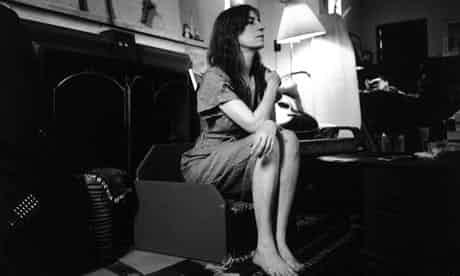
Part of the fascination in Steven Sebring’s affectionate documentary portrait Patti Smith: Dream of Life comes from the way it strives to be as elusive as its subject. As one would expect from a filmmaker who is first and foremost a high-end fashion and pop photographer, Sebring’s film is full of wonderfully moody black and white shots, superbly composed and often at once hauntingly beautiful and desperately sad. Essential to the film’s dark charm, however, is the melody of Patti Smith’s own language: in slow, hypnotically gentle, yet radiantly emphatic voice-over she briefly compiles key biographical data as well as momentous events and significant encounters that shaped her life, her narration underpinned by a vigorous force that makes every word sound like it is carved in stone. Applied to a different persona, Sebring’s approach might seem disturbingly self-indulgent, but for the most part it suits this portrait perfectly. The enormously influential punk rock poet, her music and poetry, and the times in which she flourished are indeed best served by a cinematic style that remains determinedly impressionistic.
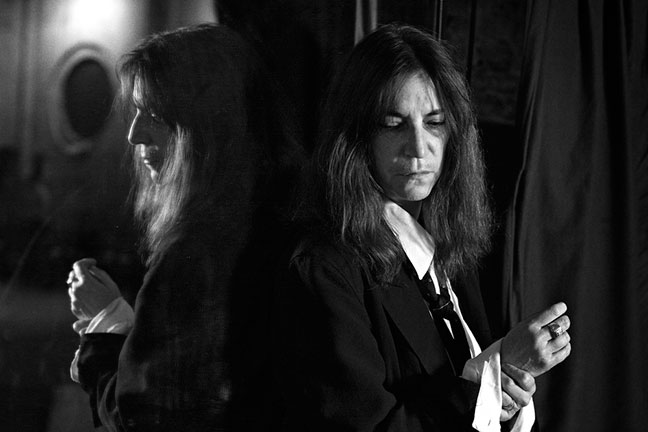
Yet, Dream of Life is undoubtedly driven by the need to make sense of the enigmatic and overpowering figure at its heart. Sebring met Patti Smith in late 1995, one year after the deaths of her husband, the guitarist Fred Smith, and her only brother Todd, when she decided to return to the stage after an absence of 16 years. He followed her with his camera in utter devotion for over a decade, shooting Smith at home or while touring around the world, visiting the graves of the poets she reveres from Alan Ginsberg to William Blake and Shelley, or checking in at her parents’ house in Deptford, New Jersey. Interwoven with these glimpses of her past and present life, there is a recurring, essential image, in which Smith is sitting in a white, sparsely furnished room amidst her greatest personal treasures, at one point showing off her favourite childhood dress before picking up her guitar and giving away secrets like her crush on the late author William S Burroughs.
Clearly a labour of love, Dream of Life is a tremendously visceral composite whose strength lies in letting the look, the sound and the mystique of Patti Smith speak for themselves. Though Sebring is no doubt guilty of glamorizing his subject and often meanders instead of providing deeper insight or even just plain facts, he edits his film in much the same wildly emotional, attentive yet open-ended way Smith performs. Although there is no denying that mild self-complacence makes this an imperfect film, it remains in the mind as a slow-paced, beautifully shot and softly nostalgic documentary, a stylized capsule of an artist’s free-floating, intense and troubled life. It is an apt celebration of Smith’s extraordinary spirit and of her continued willingness to encounter the world with undying creative desire, even after being battered by fate time and again.
October 17, 2008 | Rating: 2/4
Peter Hartlaub San Francisco Chronicle Top Critic
Documentary. Starring Patti Smith, Lenny Kaye, Sam Shepard and Jackson Smith. Directed by Steven Sebring. (Not rated. 109 minutes. At the Lumiere in San Francisco and Shattuck Cinemas in Berkeley.)
The miracle isn't that the genius, reclusive and unpredictable Patti Smith agreed to be the subject of a documentary. The surprise is that the singer and poet found a director with even fewer commercial aspirations than she has.
Fashion photographer Steven Sebring followed Smith for 11 years, shooting "Patti Smith: Dream of Life" while she was on tour and off. The result is a bounty of riches for Smith's established fans, but the narrative-free structure and back-and-forth-in-time style doesn't leave a lot of entry points for newcomers.
Shooting in black-and-white, Sebring is an excellent cinematographer, and Smith mostly welcomes the cameras - adding additional narration that enhances the project. She plays music with old friends (including Sam Shepard), talks about the 16 years that she spent out of the public eye and memorializes the dead - at one point handling the ashen remains of a close friend. She paints a grim portrait in the beginning, but the message is ultimately life-affirming.
Smith's most loyal followers won't mind the lack of context in between her excursions and the seemingly random appearances of musicians such as Philip Glass and Flea. No doubt this is exactly the film that Sebring, who clearly worships his subject, wanted to make. But even as "Patti Smith: Dream of Life" showcases Smith's brilliance as an artist, most audience members will probably want more - if nothing else more of the charged concert footage.
If you don't already own "Horses," this movie will make you want to go out and buy it. You'll also want to start surfing the Internet to fill in the blanks that "Dream of Life" fails to include.
-- Advisory:This film contains strong language and mature subject matter.
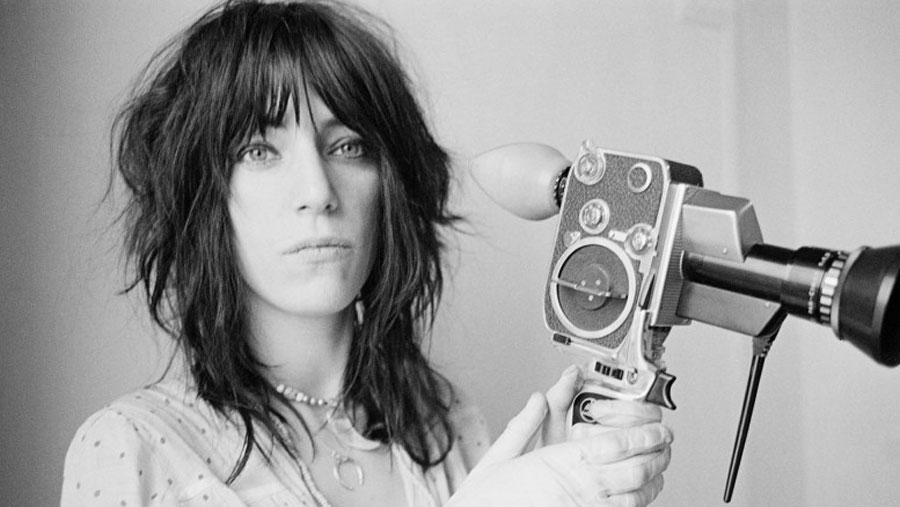
Documentary mementos of the life of punk rock pioneer Patti Smith
★★★★★
Kat Brown
27 Nov 2008
Pepper with memories, archive footage and snapshots, this sedate stroll through Patti Smith’s life plays like a trip into someone’s box of keepsakes. Sebring’s drifting tone might leave you bemused, but take it as it comes and it’s a captivating insight into modern music’s godmother. The first half rambles along beautifully, with Smith proving articulate about her life and art, with plenty of humour and groundedness for one who was hailed as the ’70s’ answer to God. The move into concert-movie territory for the second half comes as a wrench, but it’s still a warm insight into a ’70s legend who — refreshingly for such — can actually remember what she got up to.
More Background On PattiSmith-Movie.com
PattiSmith-Movie.com was created as the official website for Patti Smith: Dream of Life, the 2008 documentary that offered an unusually intimate portrait of singer, songwriter, poet, visual artist and cultural figure Patti Smith. Directed by photographer Steven Sebring, the film was neither a conventional music biography nor a straightforward concert documentary. Instead, it developed as an impressionistic record of Smith's life, creative work, friendships, family, losses and return to public performance.
The website belonged to a particular era of independent-film promotion when a dedicated domain was an important part of a movie's identity. Rather than depending primarily on social-media accounts or streaming-platform pages, independent films frequently maintained standalone sites where audiences could watch trailers, learn about filmmakers, read production information and reviews, and find information about screenings and home-video releases.
PattiSmith-Movie.com fulfilled that role for Dream of Life. The domain became closely associated with the documentary and was listed as the film's website by major movie databases and publications. Today, its historical importance is primarily as a digital record of a documentary that captured Patti Smith during one of the most significant transitional periods of her life.
What Was Patti Smith: Dream of Life?
Patti Smith: Dream of Life is a feature-length American documentary directed by Steven Sebring. The film runs approximately 109 minutes in its theatrical version and combines black-and-white and color photography, live performance material, archival footage, conversations, poetry, personal objects and Smith's own narration.
The documentary was produced by Steven Sebring, Margaret Smilow and Scott Vogel. Production companies associated with the project included Clean Socks and THIRTEEN/WNET New York. Palm Pictures handled its U.S. theatrical distribution, while other distributors brought the movie to international audiences.
Sebring came to the project primarily as a photographer rather than as an established documentary filmmaker. That background is crucial to understanding the finished movie. Dream of Life often behaves more like a moving photographic essay than a conventional biographical film.
Instead of beginning with Smith's childhood and proceeding methodically through her career, the movie moves among memories, performances, conversations, places and images. Past and present overlap. Friends and artistic influences appear without lengthy introductions. Smith talks about her life in her own rhythm rather than having historians or music critics explain her importance.
That approach gave the documentary its distinctive character and also accounted for much of the divided critical reaction to it.
An Eleven-Year Documentary Project
One of the most remarkable aspects of Dream of Life is the amount of time required to create it.
Sebring met Smith in the mid-1990s, when she was emerging from an exceptionally difficult period. Her husband, Fred "Sonic" Smith, had died in 1994. Her brother Todd also died, and longtime Patti Smith Group pianist Richard Sohl died in 1990. Smith had spent years largely removed from the public music world while raising her family in the Detroit area.
She eventually returned to New York and resumed performing.
Sebring began filming her during this transition. According to Smith's later account, the project did not initially begin as a conventional documentary with a predetermined script or structure. Sebring essentially accompanied her and recorded portions of her life.
The filming continued for roughly eleven years.
This extraordinary production period allowed Sebring to document something that a short-term documentary crew could not easily have captured: change over time. Smith is shown not simply talking retrospectively about her past but continuing to live, perform, travel, mourn, create and interact with family and friends.
Sebring accumulated footage from performances, tours and private settings. He filmed Smith in places including New York, Detroit, Japan, Israel and Washington. He also filmed her discussing personal possessions and memories in the intimate environment of her bedroom.
The resulting documentary feels less like someone explaining Patti Smith and more like an audience being temporarily admitted into her world.
Patti Smith Beyond the "Godmother of Punk"
For many casual listeners, Patti Smith is primarily identified with the emergence of New York punk and the downtown Manhattan scene of the 1970s. Her 1975 debut album Horses, produced by John Cale, became one of the defining recordings connecting rock music with poetry, experimental performance and the developing punk aesthetic.
Her history is closely linked with venues such as CBGB and with artists, writers and musicians including Robert Mapplethorpe, Allen Ginsberg, William S. Burroughs, Sam Shepard and Tom Verlaine.
Her recording career also produced her best-known commercial hit, "Because the Night," written with Bruce Springsteen. The song reached No. 13 on the Billboard Hot 100.
In 2007, Smith was inducted into the Rock & Roll Hall of Fame.
Dream of Life, however, deliberately reaches beyond this familiar public biography.
The film presents Smith as a mother, widow, daughter, reader, traveler, political participant, photographer, visual artist and poet as well as a rock performer. Family members and longtime collaborators appear alongside major cultural figures.
Among those appearing in or associated with the documentary are Lenny Kaye, Jackson Smith, Jesse Smith, Sam Shepard, Philip Glass, Flea, Tom Verlaine and Michael Stipe.
This broader perspective helps explain the film's title. "Dream of Life" is not merely about Patti Smith's musical career. It is concerned with the experience of continuing to create and live while carrying memory, grief, family history and artistic influences forward.
Steven Sebring's Visual Approach
The cinematography became one of the movie's defining features.
Sebring's background in fashion and portrait photography is apparent throughout the film. Much of Dream of Life consists of carefully composed, atmospheric imagery rather than conventional interview setups.
Sebring and Phillip Hunt are credited with cinematography. Angelo Corrao and Lin Polito handled editing.
The fragmented editing reinforces the photographic quality of the project. Scenes do not always function as pieces of a chronological argument. Instead, one image or memory can lead associatively into another.
For viewers expecting a comprehensive history of the Patti Smith Group, detailed explanations of the CBGB scene, or a chronological analysis of albums such as Horses, Radio Ethiopia, Easter and Wave, this can be surprising.
The film assumes that atmosphere, personality and memory are at least as important as dates and career milestones.
That decision became simultaneously its greatest strength and its most frequent criticism.
Sundance and the Film's Awards
Patti Smith: Dream of Life premiered at the Sundance Film Festival in January 2008.
Its visual accomplishment was immediately recognized. The documentary won the Excellence in Cinematography Award: U.S. Documentary at the 2008 Sundance Film Festival.
That award was especially significant because cinematography was central to Sebring's conception of the project. The documentary was not simply recording Smith's story; its images were intended to function as an artistic interpretation of her world.
The film subsequently appeared at international festivals, including the Berlin International Film Festival. Its festival life helped establish an international audience well beyond Patti Smith's American fan base.
The project later received another major industry recognition following its PBS presentation. At the 2010 Primetime Emmy Awards, Patti Smith: Dream of Life was nominated for Exceptional Merit in Nonfiction Filmmaking.
The Television Academy credits the PBS presentation as a production of Clean Socks and THIRTEEN for WNET.ORG in association with American Documentary | POV, with Simon Kilmurry, Steven Sebring and Margaret Smilow among the nominated executive producers.
Theatrical Release and Popularity
Despite its prominent subject and festival recognition, Dream of Life was never a mass-market theatrical release.
Palm Pictures distributed the movie theatrically in the United States. It opened in New York on August 6, 2008, with a later Los Angeles opening in October.
Box Office Mojo records approximately $30,918 in domestic theatrical grosses and $81,113 worldwide from reported markets. The United Kingdom accounted for nearly $30,000 of the reported international total, while Sweden contributed more than $20,000.
Those numbers illustrate the specialized nature of the release.
Dream of Life was not designed to compete commercially with mainstream feature films. Its natural audience consisted of Patti Smith admirers, documentary enthusiasts, independent-film audiences, musicians, poets, photographers, students of New York cultural history and people interested in the intersections of rock, literature and visual art.
Its significance consequently cannot be measured adequately by box-office revenue.
Festival exposure, critical attention, television broadcast and subsequent availability on home-video and digital platforms gave the documentary a much longer cultural life than its modest theatrical grosses might suggest.
PBS and POV Brought the Film to a Larger Audience
An important second stage in the film's life came through PBS.
Patti Smith: Dream of Life became part of POV, the long-running PBS showcase for independent nonfiction filmmaking. PBS premiered the documentary on December 30, 2009 — Patti Smith's 63rd birthday.
The PBS presentation significantly expanded access to a movie that previously had a limited theatrical footprint.
POV described the film as an impressionistic journal examining Smith's multiple art forms and her relationships with figures such as William Burroughs, Allen Ginsberg, Bob Dylan, Robert Mapplethorpe and Michael Stipe.
PBS also developed educational resources around the documentary, including a discussion guide. That broadened the film's potential audience beyond music fans and moviegoers to classrooms, libraries and community discussions.
The documentary was subsequently rebroadcast by PBS, further extending its life beyond the 2008 theatrical campaign.
Critical Reception
Critical reaction to Dream of Life was generally favorable but far from unanimous.
Metacritic records a score of 66 based on 15 critic reviews, placing the film in its "generally favorable" category. The reviews reveal an unusually consistent division: critics who responded to Sebring's impressionistic method often considered it perfectly suited to Smith, while detractors wanted greater narrative structure, historical context and more music.
Manohla Dargis of The New York Times responded strongly to the movie's drifting, intimate quality, describing the film in terms suggesting devotion rather than traditional documentary journalism.
Other critics similarly admired the black-and-white photography, Smith's presence and the sense that the movie's unconventional structure reflected the subject herself.
Peter Bradshaw of The Guardian found moments of genuine insight and emotion but also considered the movie meandering and indulgent.
Other reviewers raised a related criticism: viewers unfamiliar with Patti Smith might finish the documentary without receiving the basic historical information expected from a biography. Major career events can be passed over quickly, and important people sometimes appear with limited explanation.
That is a legitimate consequence of Sebring's artistic choice. Dream of Life is more interested in what it feels like to spend time in Smith's world than in providing a definitive explanation of her career.
The Importance of New York, Detroit and New Jersey
Several locations are fundamental to the story behind both Patti Smith and the documentary.
New Jersey represents Smith's family background. She grew up in the state, and the film includes personal and family dimensions that contrast with her public identity as a New York artist.
New York City represents artistic formation. Smith's connection with downtown Manhattan, poetry readings, Robert Mapplethorpe, the Chelsea Hotel and CBGB placed her at the intersection of several important cultural movements.
Detroit represents another stage entirely.
Smith married Fred "Sonic" Smith of the MC5 and withdrew substantially from public performance while they raised their family in Michigan. Her years away from the conventional rock-career cycle are crucial to understanding Dream of Life because Sebring began filming around the time she was reconstructing her public and creative life following devastating personal losses.
The documentary therefore moves geographically as well as emotionally. These locations represent different identities: daughter, emerging poet, punk performer, wife, mother, widow and returning artist.
Music, Poetry and the People Around Patti Smith
Although the documentary bears Patti Smith's name, it also operates as a portrait of an artistic network.
Smith's creative world crossed disciplinary boundaries long before such collaborations became commonplace. Poetry, rock music, photography, drawing and performance all intersected in her career.
Robert Mapplethorpe was central to her early New York years and created the famous cover photograph for Horses. Allen Ginsberg and William Burroughs connected Smith to the Beat literary tradition. Sam Shepard represented another bridge between experimental theater, writing and music. Michael Stipe represented a later generation of alternative musicians who regarded Smith as an important influence.
Sebring's film places these relationships within Smith's personal landscape rather than presenting them merely as celebrity appearances.
This is one reason PBS characterized Smith as a link between the Beats, punk and contemporary music.
The Dream of Life Book
The movie also generated a related publishing project.
Because Sebring shot Dream of Life on 16mm film, the process of digitally scanning the footage effectively produced individual photographic images from the movie's frames. Sebring recognized that these frames could become a separate visual archive.
This developed into the Dream of Life book, which extended the documentary into still photography and included imagery and additional material connected with the production.
The project demonstrates how Sebring conceived the film as more than a conventional motion picture. Photography, cinema, archival documentation and Smith's own multimedia artistic identity overlapped.
The original website was therefore promoting not simply a movie but a larger visual record of the collaboration between Smith and Sebring.
What PattiSmith-Movie.com Was Designed to Accomplish
The purpose of PattiSmith-Movie.com was straightforward but important: establish a dedicated online home for Patti Smith: Dream of Life.
For an independent documentary, an official website could serve several audiences simultaneously.
Moviegoers could learn what the film was about. Patti Smith fans could see material connected with the project. Journalists and critics could identify production details. Festival audiences could find background information. Potential viewers could watch promotional material and learn about screenings or releases.
The memorable exact-match style domain also tied Patti Smith's name directly to the movie.
Unlike today's film marketing environment, where a title may exist primarily as a page within Netflix, Amazon, Apple TV, a distributor's catalog or social media, a standalone movie domain gave a film its own digital identity.
That makes domains such as PattiSmith-Movie.com useful historical artifacts after their original promotional function has ended.
Cultural and Social Significance
The enduring value of Dream of Life comes partly from the period it documents.
Patti Smith occupies an unusual position in American culture. She was part of the emergence of punk without fitting comfortably within the narrow definition of a punk musician. Her work incorporated French symbolist poetry, Beat writing, improvisation, garage rock, political expression, visual art and performance poetry.
She also influenced generations of musicians while repeatedly resisting simplified descriptions of herself.
Sebring's documentary preserves this complexity.
It captures an older Smith looking backward but continuing to work. It documents a woman whose public identity was shaped in youth while refusing to treat youth as the only period of artistic importance.
That dimension has become increasingly significant as Smith's literary reputation has expanded. Her memoir Just Kids, published in 2010 shortly after the PBS broadcast of Dream of Life, won the National Book Award for Nonfiction and introduced another large audience to her relationship with Mapplethorpe and the artistic world of 1960s and 1970s New York.
In retrospect, Dream of Life arrived at an important moment: after Smith had already become a canonical figure in rock history but just before her memoir brought renewed mainstream attention to her life as a writer.
Who Is Most Likely to Appreciate the Film?
The documentary has several overlapping audiences.
Longtime Patti Smith fans are likely to appreciate its access to private moments, family life, performances and reflections. Students of punk and alternative music can view it as a personal complement to more historically structured accounts of the 1970s New York scene.
Photographers and filmmakers may be especially interested in Sebring's visual methods and the unusual decade-long production process.
Readers of Smith's poetry and memoirs may find that the film resembles her written work more closely than a conventional music documentary. Images, memories, objects, places and people accumulate meaning without always being organized into a linear argument.
Newcomers should understand this distinction before watching.
Anyone seeking a comprehensive introduction to Patti Smith's albums, chart history, CBGB performances or role in punk may need additional background. Dream of Life is better understood as an intimate companion to that history than as a replacement for it.
The Legacy of PattiSmith-Movie.com
PattiSmith-Movie.com represents more than an old promotional domain. It is connected to an award-winning documentary created during an extraordinary eleven-year collaboration between Steven Sebring and Patti Smith.
The film premiered at Sundance, won the festival's Excellence in Cinematography Award for U.S. Documentary, traveled through the international festival circuit, received theatrical distribution, aired nationally through PBS's POV and earned a Primetime Emmy nomination.
Its commercial theatrical footprint was modest, but its cultural reach was considerably larger.
Most importantly, Patti Smith: Dream of Life avoided turning Smith into a collection of familiar rock-history milestones. Sebring created something less orderly and more personal: a cinematic notebook filled with performance, grief, humor, poetry, family, travel, friendship, memory and everyday life.
That approach frustrated some reviewers and fascinated others. In either case, it made the documentary distinctive.
For people encountering PattiSmith-Movie.com years after the film's original release, understanding this background explains why the domain remains interesting. It belonged to a project that attempted to preserve not merely what Patti Smith accomplished, but something much harder to document — the atmosphere surrounding an artist's life.